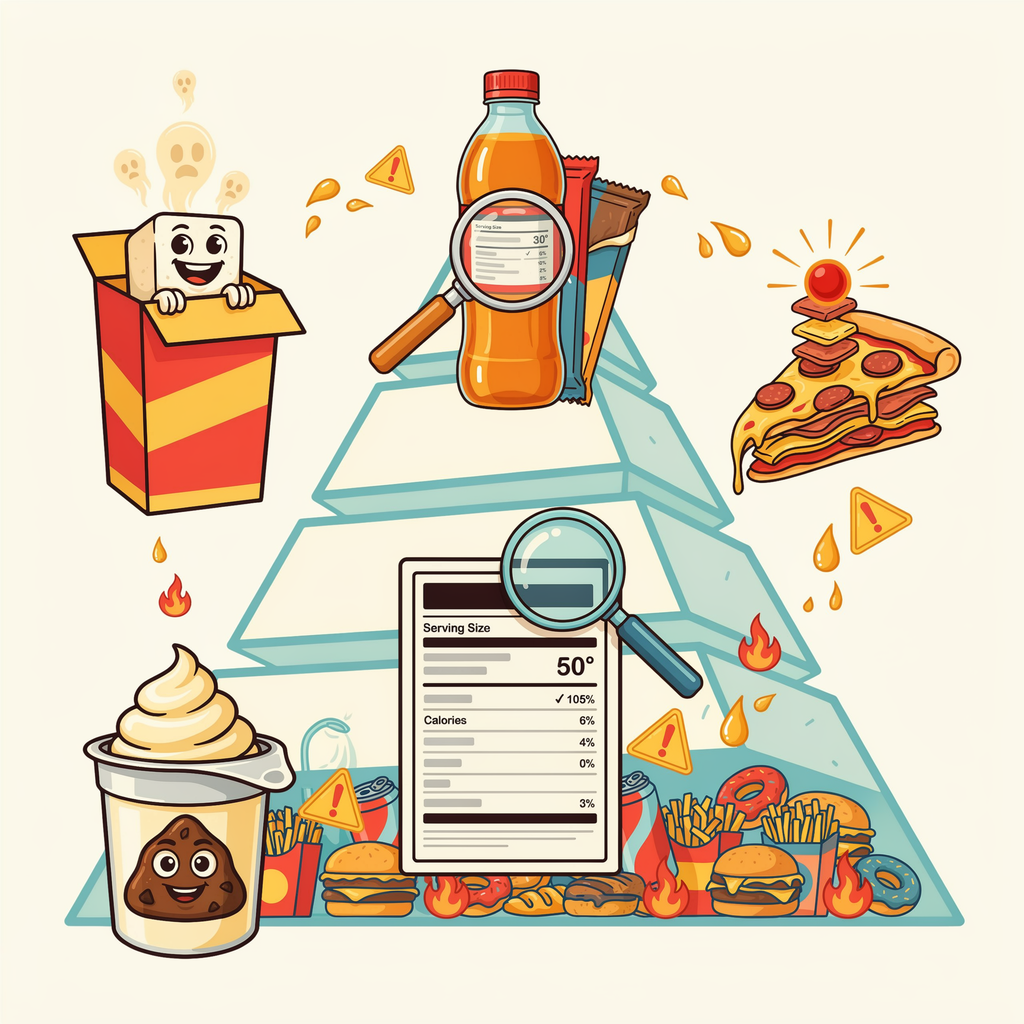
Why the Front of the Package Is Not the Whole Story
Most people do not set out to consume more calories, sugar, sodium, or saturated fat than they intended. It often happens quietly.
A splash of dressing, a “healthy” granola bar, a sweetened drink, a larger-than-expected serving, or a product marketed as “natural,” “light,” or “made with whole grains” can add more than people realize.
That is the problem with hidden calories. They are not necessarily hidden because food companies are doing something illegal or because consumers are careless.
They are hidden because modern food packaging is busy, serving sizes can be confusing, marketing language can be persuasive, and many calorie-dense ingredients are easy to overlook.
Food label literacy is the practical skill of looking past the front-of-package message and understanding what the label is actually telling you.
Calories Are Not the Enemy — But Awareness Matters
Calories are simply a measure of energy. Everyone needs energy from food. The goal is not to fear calories or reduce eating to numbers.
The goal is to understand what you are getting from a food and whether that food fits the purpose you think it serves.
A product may be useful, enjoyable, convenient, or nutritious. But a label helps answer a more specific question: “What am I actually consuming when I eat or drink this?”
That question matters because many foods that appear light, wholesome, or modest can contain more calories than expected, especially when the usual portion is larger than the stated serving size.
The First Place to Look: Serving Size
The most important number on a nutrition label is often not calories. It is the serving size.
Nutrition information is usually based on one stated serving.
If the package contains two servings and someone eats the whole package, the calories, sugar, sodium, fat, and other nutrients must be doubled.
This is one of the most common sources of hidden calories.
A muffin, bottled drink, snack bag, frozen entrée, cereal bowl, or dessert may look like a single eating occasion, but the label may define it differently.
A simple label-reading habit is:
Serving size first. Calories second. Nutrients third.
Before judging any number on the label, ask: “Is this the amount I would actually eat or drink?”
The “Health Halo” Problem
Some foods gain a health halo because of words on the front of the package. Examples include:
- natural
- plant-based
- multigrain
- baked
- organic
- low-fat
- gluten-free
- made with real fruit
- no artificial colors
- source of fiber
These claims may be true, but they do not automatically mean the food is low in calories, sugar, sodium, or saturated fat. A cookie can be organic.
A snack can be gluten-free and still be high in sugar. A drink can contain real fruit and still deliver a large amount of sugar.
A low-fat product can still be high in calories if it contains added sugars or refined starches.
The front of the package is marketing. The Nutrition Facts table and ingredient list are evidence.
Where Hidden Calories Often Come From
Hidden calories often come from ingredients that are easy to underestimate because they are added in small amounts or appear in foods people do not think of as “high calorie.”
Common sources include:
Beverages: sweetened coffees, juices, smoothies, energy drinks, flavored milks, sweetened teas, and specialty drinks.
Sauces and condiments: salad dressings, mayonnaise-based sauces, barbecue sauce, teriyaki sauce, dips, spreads, and creamy toppings.
Snack foods: granola, trail mix, crackers, chips, protein bars, energy bites, and “better-for-you” packaged snacks.
Restaurant-style additions: cheese, creamy sauces, fried toppings, croutons, oils, dressings, and extra spreads.
Large portions of calorie-dense foods: nuts, seeds, oils, nut butters, avocado, dried fruit, and cheese. These foods can be nutritious, but the portion matters.
The issue is not that these foods are “bad.”
The issue is that people often consume more than they think because the food is dense, liquid, heavily topped, or packaged in portions that feel smaller than they are.
Sugar: Look Beyond the Word “Sweet”
Sugar is not only found in desserts. It can show up in cereals, yogurts, sauces, soups, breads, crackers, flavored drinks, prepared meals, and snack products.
In Canada, the Nutrition Facts table lists total sugars. The ingredient list can also help because sugars-based ingredients are grouped together under “Sugars” and listed in brackets.
This makes it easier to see when a product contains added sugar sources that might otherwise appear under several different names.
In the United States, labels also identify “added sugars,” which helps distinguish sugars added during processing from sugars naturally present in foods such as milk and fruit.
Either way, the key is to avoid relying only on taste. A food does not need to taste like candy to contain a meaningful amount of sugar.
The Ingredient List Tells a Different Story
The ingredient list is especially useful because ingredients are listed by weight, from most to least.
If sugars, oils, refined starches, or salty ingredients appear near the beginning of the list, they are major parts of the product.
This is where food label literacy becomes powerful.
A front label may say “made with whole grains,” but the ingredient list may reveal that refined flour, sugars, or oils make up a larger share of the product.
A fruit snack may show fruit images on the package, but the ingredient list may reveal that fruit concentrate and sugars are doing most of the work.
The ingredient list does not tell the whole nutritional story, but it helps reveal what the product is built from.
Use % Daily Value as a Shortcut
Percent Daily Value is designed to help people quickly judge whether a serving contains a little or a lot of a nutrient.
In Canada, a useful rule is:
5% Daily Value or less is a little.
15% Daily Value or more is a lot.
This is especially helpful for nutrients many people are encouraged to limit, such as sodium, sugars, and saturated fat.
It is also useful for nutrients people may want more of, such as fibre, calcium, iron, and potassium.
The point is not to calculate everything perfectly. The point is to compare similar products quickly.
If two cereals, soups, yogurts, or frozen meals look similar, the % Daily Value can help show which one is higher or lower in nutrients that matter.
Watch for Liquid Calories
Drinks are one of the easiest places for calories to go unnoticed. Liquids are often consumed quickly and may not feel as filling as solid foods.
A coffee drink, juice, smoothie, sweetened tea, or flavored beverage may contain more sugar and calories than expected, especially when the serving size is large.
Even drinks that sound healthy can become calorie-dense when they include syrups, sweetened bases, creams, juices, or large portions of blended ingredients.
A useful habit is to check beverages the same way you check food: serving size, calories, sugars, and ingredients.
Front-of-Package Symbols Can Help — But They Are Not Everything
Canada’s front-of-package nutrition symbol is designed to help shoppers quickly identify packaged foods that are high in saturated fat, sugars, or sodium.
This is helpful because many people make grocery decisions quickly and do not have time to study every label in detail.
But front-of-package warnings are not a complete nutrition education system. Some foods may not require the symbol because they are exempt.
Others may still be calorie-dense without being high enough in saturated fat, sugars, or sodium to trigger attention.
The symbol is a useful shortcut. It should not replace the full label.
Practical Label-Reading Method
A simple approach works best:
- Check the serving size. Is it the amount you would actually eat or drink?
- Check calories per serving. Then adjust if you would eat more than one serving.
- Look at sugars, sodium, and saturated fat. Use % Daily Value to judge whether the amount is low or high.
- Check fibre and protein. These can help you understand how satisfying the food may be.
- Read the ingredient list. Look at what appears near the beginning.
- Compare similar products. Labels are most useful when comparing one cereal to another, one yogurt to another, or one sauce to another.
This process does not need to take long. Once people practise it, they can scan a label in seconds.
The Real Goal: Informed Choice
Food label literacy is not about perfection. It is about reducing confusion.
People should be able to enjoy food, use convenience products when needed, and make choices that fit their lives.
But they should also be able to see through vague marketing claims, understand serving sizes, identify calorie-dense additions, and compare products with confidence.
Hidden calories are usually not hidden in the fine print.
They are hidden in habits: eating the whole package without noticing the servings, pouring dressing freely, drinking calories quickly, trusting the front label, or assuming that “healthy-sounding” means nutritionally balanced.
The label gives consumers a way to pause, check, and choose with more clarity.
The most powerful question is simple:
Does the label match the impression the package is trying to give me?
When people can answer that question, they are no longer just shoppers. They are informed decision-makers.