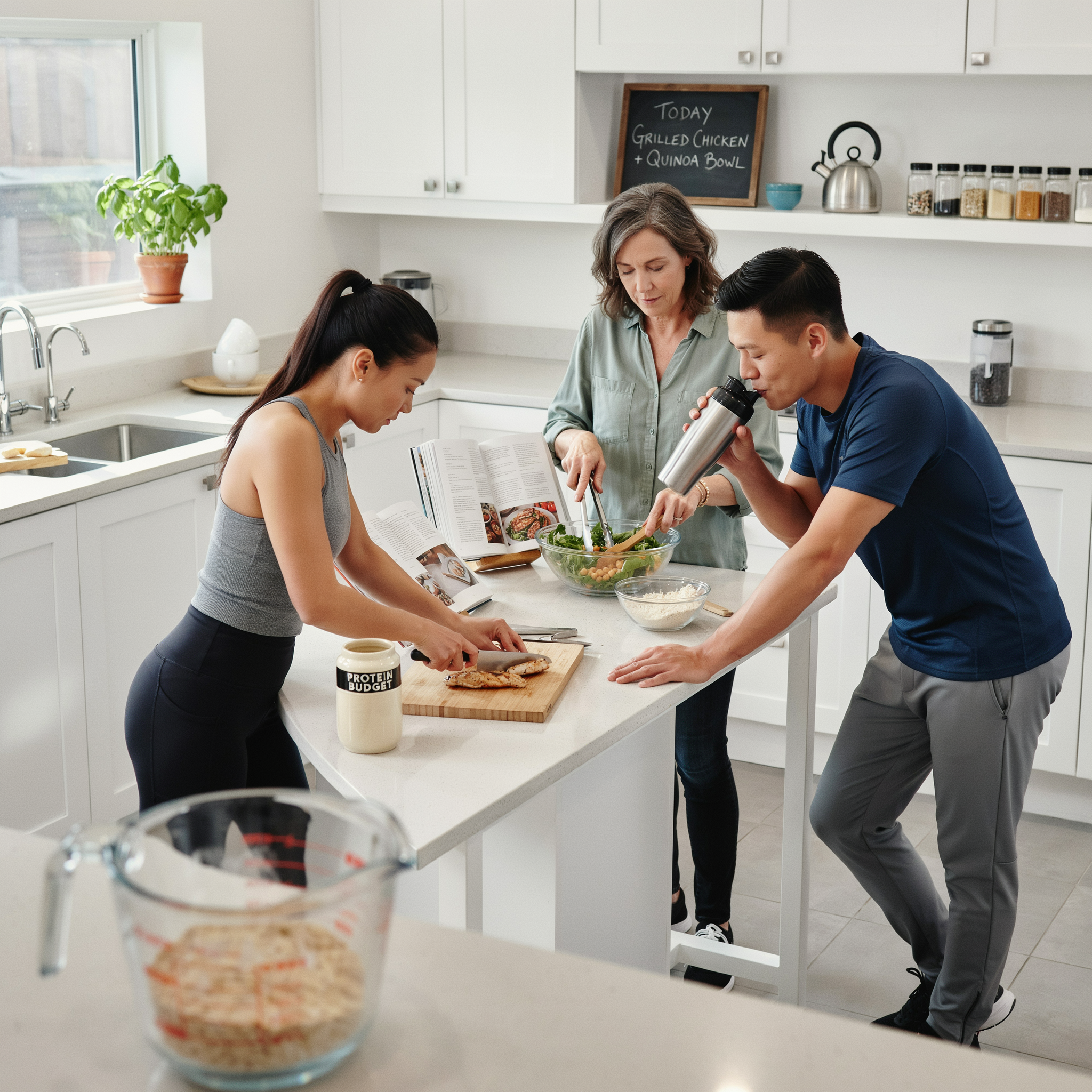
The High-Protein Calorie Budget Blueprint
Build Filling, Fat-Loss-Friendly Meals That Fit Your Calories Without Living on Tiny Portions
A calorie deficit only works if you can actually stick to it.
That is where protein becomes powerful.
Protein-rich meals can make a calorie budget feel more satisfying by helping you build meals around foods that support fullness, muscle maintenance, and better meal structure.
This blueprint gives you a practical system for turning a daily calorie target into high-protein breakfasts, lunches, dinners, and snacks—without needing complicated meal plans or repetitive “diet food.”
Important: This guide is for general educational purposes and is not individualized medical or nutrition advice. Protein needs vary based on age, body size, activity level, health status, pregnancy, medications, kidney function, and other factors. Anyone with a medical condition affecting protein intake should follow guidance from a qualified healthcare professional.
PART 1: THE CORE HIGH-PROTEIN CALORIE FORMULA
The goal is not to eat as much protein as possible.
The goal is to give protein a deliberate place inside your calorie budget.
Use this simple hierarchy:
Protein First → Produce Second → Carbs Third → Fats Intentionally
This creates meals that are easier to control without making them feel small.
THE 4-PART MEAL BUILDER
Every main meal can be built from four blocks.
BLOCK 1 — PROTEIN
Examples:
- Chicken breast
- Turkey
- Lean beef
- Fish
- Shrimp
- Eggs
- Egg whites
- Greek yogurt
- Cottage cheese
- Tofu
- Tempeh
- Beans
- Lentils
- High-protein dairy alternatives
- Protein powder when useful
BLOCK 2 — HIGH-VOLUME PRODUCE
Examples:
- Broccoli
- Cauliflower
- Zucchini
- Green beans
- Salad greens
- Peppers
- Mushrooms
- Tomatoes
- Berries
- Melon
- Apples
- Oranges
BLOCK 3 — SATISFYING CARBOHYDRATE
Examples:
- Potatoes
- Rice
- Oats
- Pasta
- Bread
- Tortillas
- Quinoa
- Beans
- Fruit
BLOCK 4 — INTENTIONAL FAT
Examples:
- Olive oil
- Avocado
- Nuts
- Nut butter
- Cheese
- Dressing
- Seeds
Fat is not something to fear.
It is something to portion intentionally because calories can add up quickly.
PART 2: BUILD YOUR DAILY CALORIE BUDGET
Start with your personal daily calorie target.
Example:
2,000 calories
Now divide those calories across meals.
One example structure:
Breakfast:
450 calories
Lunch:
550 calories
Snack:
250 calories
Dinner:
650 calories
Flexibility:
100 calories
Total:
2,000 calories
This is only a template.
You can distribute calories differently depending on your appetite and lifestyle.
PART 3: THE PROTEIN DISTRIBUTION RULE
Rather than saving most of your protein for one giant dinner, spread protein across the day.
A practical structure may look like:
Breakfast:
20–35 g protein
Lunch:
25–40 g protein
Snack:
15–30 g protein
Dinner:
30–45 g protein
The exact amount should be personalized.
The key idea is consistency.
Why Distribution Helps
It can make meals feel more substantial and reduce the common pattern of eating a low-protein breakfast and lunch, then becoming extremely hungry later.
PART 4: THE “PROTEIN BEFORE CALORIES” MEAL DESIGN METHOD
When planning a meal, do not begin with:
“How little can I eat?”
Begin with:
“What is my protein anchor?”
Then build around it.
Example:
Instead of:
“I’m having pasta.”
Ask:
“What protein will anchor my pasta?”
Options:
- Lean beef
- Chicken
- Shrimp
- Turkey
- Lentils
- Tofu
Now the meal becomes more balanced.
PART 5: HIGH-PROTEIN BREAKFAST BLUEPRINT
Use this formula:
Protein Base + Fruit/Produce + Carb + Optional Fat
Option 1
Greek yogurt
Berries
Oats
Small amount of nut butter
Approximate range:
350–500 calories
Protein can often land around:
25–35 g, depending on portions and products.
Option 2
Eggs + egg whites
Toast
Fruit
Approximate range:
350–500 calories
Option 3
Protein oats
Oats
Milk
Protein powder
Berries
Approximate range:
400–550 calories
Option 4
Cottage cheese bowl
Cottage cheese
Fruit
Cereal or granola
Seeds
Approximate range:
350–500 calories
Option 5
Breakfast wrap
Eggs or egg whites
Lean meat or beans
Vegetables
Tortilla
Measured cheese
Approximate range:
400–550 calories
PART 6: HIGH-PROTEIN LUNCH BLUEPRINT
Use:
Protein + Carb + 2 Vegetables + Sauce
Chicken Rice Bowl
Chicken
Rice
Peppers
Broccoli
Measured sauce
Approximate range:
500–650 calories
Turkey Sandwich Plate
Turkey sandwich
Fruit
Greek yogurt
Approximate range:
450–650 calories
High-Protein Salad
Chicken or tofu
Large salad base
Beans
Vegetables
Measured dressing
Approximate range:
400–600 calories
Burrito Bowl
Lean protein
Rice
Beans
Salsa
Vegetables
Measured cheese or guacamole
Approximate range:
500–700 calories
PART 7: HIGH-PROTEIN DINNER BLUEPRINT
Dinner can feel generous without destroying your calorie budget.
Use:
Large Protein Serving + High-Volume Vegetables + Satisfying Carb + Controlled Fat
Example 1
Chicken
Roasted potatoes
Green beans
Measured olive oil
Approximate range:
550–700 calories
Example 2
Lean beef stir-fry
Rice
Mixed vegetables
Measured sauce
Approximate range:
550–750 calories
Example 3
Salmon
Potatoes
Asparagus
Approximate range:
600–800 calories
Example 4
Turkey taco plate
Tortillas
Lettuce
Tomato
Salsa
Measured cheese
Approximate range:
550–750 calories
Example 5
Protein pasta bowl
Pasta
Lean meat sauce
Vegetables
Measured parmesan
Approximate range:
550–750 calories
PART 8: THE 200–300 CALORIE HIGH-PROTEIN SNACK SYSTEM
A snack should solve a problem.
That problem might be:
- Hunger
- Long gap between meals
- Low protein intake
- Pre-workout fuel
- Evening hunger
Use combinations like:
Greek Yogurt + Fruit
Approximate range:
150–250 calories
Cottage Cheese + Berries
Approximate range:
150–250 calories
Protein Shake + Banana
Approximate range:
200–300 calories
Turkey Roll-Ups + Fruit
Approximate range:
150–250 calories
Eggs + Fruit
Approximate range:
150–250 calories
Edamame
Approximate range:
150–250 calories
PART 9: THE CALORIE-TO-PROTEIN EFFICIENCY TEST
Some foods provide a lot of protein for relatively few calories.
Others provide some protein but a much larger calorie load.
Ask:
“How much protein am I getting for these calories?”
Examples of generally efficient protein sources:
- Lean poultry
- White fish
- Shrimp
- Low-fat Greek yogurt
- Cottage cheese
- Egg whites
- Lean meat
- Some tofu products
- Protein powder
Examples that can be more calorie-dense:
- Fatty cuts of meat
- Full-fat cheese
- Nuts
- Nut butter
- High-calorie protein bars
These foods can all fit.
But if your calorie budget is tight, your protein source matters.
PART 10: THE PROTEIN ANCHOR CHEAT SHEET
Use one protein anchor at each meal.
Breakfast Anchors
- Greek yogurt
- Eggs + egg whites
- Cottage cheese
- Protein oats
- Protein smoothie
Lunch Anchors
- Chicken
- Turkey
- Tuna
- Lean beef
- Tofu
- Lentils
- Beans
Dinner Anchors
- Chicken
- Fish
- Lean beef
- Turkey
- Shrimp
- Tofu
- Tempeh
Snack Anchors
- Greek yogurt
- Cottage cheese
- Protein shake
- Eggs
- Edamame
PART 11: THE PLATE VOLUME HACK
If your calorie budget feels too small, increase the physical volume of the meal.
Add more:
- Vegetables
- Fruit
- Broth-based soups
- Potatoes
- Lean protein
- Salad greens
- Water-rich foods
Reduce the amount of calorie-dense extras that do not add much physical volume.
Examples:
Instead of 3 tablespoons of oil:
Use 1 tablespoon.
Instead of a huge handful of nuts:
Use a measured serving.
Instead of heavy creamy sauce:
Use a lighter portion plus more vegetables.
The goal is not to remove enjoyment.
The goal is to spend calories where you notice them most.
PART 12: THE “PROTEIN + PRODUCE” RULE FOR HUNGER
If a meal leaves you hungry quickly, first inspect:
Did I get enough protein?
Did I include produce?
A meal like:
Small bagel + coffee
may be less filling than:
Eggs + egg whites + toast + fruit
even at similar calories.
The calorie number matters.
But food composition influences how manageable that calorie target feels.
PART 13: THE HIGH-PROTEIN SWAP FILE
Use these swaps when you want to increase protein without dramatically increasing calories.
Instead of
Regular yogurt
Try:
Higher-protein Greek yogurt
Instead of
A snack made mostly from crackers
Try:
Crackers + cottage cheese
Instead of
Pasta with only sauce
Try:
Pasta + lean meat or lentils
Instead of
Toast alone
Try:
Toast + eggs
Instead of
A fruit-only smoothie
Try:
Fruit + protein powder + milk or yogurt
Instead of
Salad with only vegetables
Try:
Add chicken, tuna, tofu, beans, or lentils
PART 14: THE CALORIE-DENSE “PROTEIN” TRAP
Some foods are marketed as protein foods but are still highly calorie-dense.
Audit:
- Protein cookies
- Protein brownies
- Protein cereal
- Protein granola
- Protein bars
- Peanut butter
- Nuts
- Cheese
Ask:
“Is this primarily a protein source—or primarily a snack that happens to contain protein?”
There is nothing wrong with enjoying them.
Just do not assume the word “protein” automatically makes them calorie-efficient.
PART 15: THE 500-CALORIE MEAL FORMULA
Build a satisfying meal around approximately 500 calories.
Example structure:
Protein:
200 calories
Carbohydrate:
150 calories
Vegetables:
50 calories
Sauce/fat:
100 calories
Total:
500 calories
Example meal:
Chicken
Rice
Broccoli
Measured sauce
This gives you a simple template instead of guessing.
PART 16: THE 600-CALORIE DINNER FORMULA
Example structure:
Protein:
250 calories
Carbohydrate:
200 calories
Vegetables:
75 calories
Fat/sauce:
75 calories
Total:
600 calories
If you prefer larger dinners, simply allocate more of your daily calorie budget there.
PART 17: THE “SAVE CALORIES WITHOUT SHRINKING THE MEAL” SYSTEM
Instead of cutting food volume, look for calorie-dense ingredients you can reduce.
Reduce
Oil
Keep
Vegetables
Reduce
Heavy dressing
Keep
Large salad
Reduce
Extra cheese
Keep
Lean protein
Reduce
Large nut portions
Keep
Fruit or yogurt
Reduce
Creamy sauce
Keep
Rice, chicken, and vegetables
This creates a bigger-looking plate for fewer calories.
PART 18: THE HIGH-PROTEIN RESTAURANT FRAMEWORK
When ordering out, prioritize:
Protein → Vegetable → Carb → Sauce
Step 1
Choose a protein-heavy entrée.
Examples:
- Grilled chicken
- Fish
- Lean steak
- Shrimp
- Tofu
Step 2
Add vegetables.
Step 3
Choose your carbohydrate.
Step 4
Control the most calorie-dense extras.
Ask for sauces or dressings on the side when helpful.
You do not have to order the “lowest calorie” item.
You are simply making the meal easier to fit into your budget.
PART 19: FAST-FOOD HIGH-PROTEIN STRATEGY
Use three rules.
Rule 1 — Identify the Protein
Chicken, beef, eggs, beans, etc.
Rule 2 — Decide Which Extras Matter
Cheese?
Sauce?
Fries?
Dessert?
You do not need everything every time.
Rule 3 — Use Published Nutrition Information When Available
This makes tracking much easier.
PART 20: THE HIGH-PROTEIN GROCERY LIST
Lean Proteins
☐ Chicken breast
☐ Turkey
☐ Lean ground meat
☐ Fish
☐ Shrimp
☐ Tuna
☐ Eggs
☐ Egg whites
☐ Greek yogurt
☐ Cottage cheese
☐ Tofu
☐ Tempeh
☐ Beans
☐ Lentils
☐ Protein powder
High-Volume Produce
☐ Broccoli
☐ Cauliflower
☐ Peppers
☐ Zucchini
☐ Spinach
☐ Salad greens
☐ Tomatoes
☐ Green beans
☐ Berries
☐ Apples
☐ Oranges
☐ Melon
Carbohydrates
☐ Potatoes
☐ Rice
☐ Oats
☐ Pasta
☐ Tortillas
☐ Bread
☐ Quinoa
☐ Fruit
Flavor Builders
☐ Salsa
☐ Mustard
☐ Hot sauce
☐ Low-calorie marinades
☐ Herbs
☐ Spices
☐ Garlic
☐ Citrus
☐ Measured dressings
PART 21: THE 15-MINUTE WEEKLY PROTEIN PREP
Once per week, prepare the building blocks.
Step 1 — Cook 2 Proteins
Example:
Chicken
Turkey
Step 2 — Cook 2 Carbs
Example:
Rice
Potatoes
Step 3 — Prepare Vegetables
Wash, chop, roast, or steam.
Step 4 — Choose Sauces
Pick 2–3.
Step 5 — Portion Snacks
Prepare:
Greek yogurt
Fruit
Protein shakes
Cottage cheese
Now you have dozens of meal combinations without needing seven unique recipes.
PART 22: THE MIX-AND-MATCH MEAL GRID
Choose one item from each column.
PROTEIN
Chicken
Turkey
Fish
Lean beef
Tofu
Beans
CARB
Rice
Potatoes
Pasta
Bread
Tortilla
Quinoa
VEGETABLE
Broccoli
Peppers
Zucchini
Salad
Green beans
Cauliflower
FLAVOR
Salsa
Pesto
Teriyaki
Hot sauce
Greek-style dressing
Garlic herb sauce
This creates:
6 × 6 × 6 × 6 = 1,296 possible combinations
You do not need a giant meal plan.
You need a repeatable formula.
PART 23: THE EMERGENCY HIGH-PROTEIN MEAL LIST
Use these when you have no time.
Option 1
Rotisserie chicken + microwave rice + salad
Option 2
Greek yogurt + fruit + cereal
Option 3
Tuna sandwich + fruit
Option 4
Eggs + toast + frozen vegetables
Option 5
Protein shake + banana + yogurt
Option 6
Frozen high-protein entrée + vegetables
Option 7
Cottage cheese + fruit + toast
Convenience is not failure.
Convenience can protect consistency.
PART 24: THE HUNGER DIAGNOSTIC
If you are constantly hungry, check these before assuming you need more discipline.
☐ Protein too low?
☐ Meals too small?
☐ Too many liquid calories?
☐ Too many low-volume snacks?
☐ Not enough fruit or vegetables?
☐ Not enough fiber?
☐ Large gaps between meals?
☐ Poor sleep?
☐ Calorie target too aggressive?
☐ Training volume increased?
If several apply, fix the structure.
PART 25: THE NIGHTTIME HUNGER FIX
Many people spend too many calories early.
Then dinner arrives and they are starving.
Instead of forcing tiny dinners, redistribute calories.
Example
Old structure:
Breakfast: 600
Lunch: 700
Snack: 350
Dinner: 400
Total:
2,050
New structure:
Breakfast: 400
Lunch: 500
Snack: 250
Dinner: 750
Flexibility: 150
Total:
2,050
Same calories.
Much more satisfying if evenings are when your hunger is highest.
PART 26: THE HIGH-PROTEIN DESSERT STRATEGY
You do not need to remove dessert.
You can either:
Option 1
Budget for the dessert you genuinely want.
or
Option 2
Use a higher-protein alternative.
Examples:
Greek yogurt bowl
Protein pudding
Cottage cheese dessert bowl
Protein smoothie
The key is choice.
Do not automatically replace every enjoyable food with a “diet” version.
PART 27: THE 7-DAY HIGH-PROTEIN MEAL PLANNER
DAY 1
Breakfast:
Protein source:
Lunch:
Protein source:
Snack:
Dinner:
Daily calories:
DAY 2
Breakfast:
Lunch:
Snack:
Dinner:
Daily calories:
DAY 3
Breakfast:
Lunch:
Snack:
Dinner:
Daily calories:
DAY 4
Breakfast:
Lunch:
Snack:
Dinner:
Daily calories:
DAY 5
Breakfast:
Lunch:
Snack:
Dinner:
Daily calories:
DAY 6
Breakfast:
Lunch:
Snack:
Dinner:
Daily calories:
DAY 7
Breakfast:
Lunch:
Snack:
Dinner:
Daily calories:
PART 28: THE “PROTEIN GAP” AUDIT
At the end of your day, look for meals with very little protein.
Example:
Breakfast:
Toast + coffee
Lunch:
Small salad
Dinner:
Large chicken dinner
Your dinner may contain plenty of protein.
But the first half of the day may still be poorly structured.
Ask:
Which meal needs a stronger protein anchor?
Breakfast?
Lunch?
Snack?
Fix one meal at a time.
PART 29: THE 3-DAY PROTEIN RESET
Use this when your meals feel chaotic.
For three days:
Breakfast
Pick one protein anchor.
Lunch
Pick one protein anchor.
Snack
Choose a protein-containing snack.
Dinner
Use the four-part meal formula.
Do not reinvent the plan.
Repeat meals if necessary.
The goal is to rebuild structure quickly.
PART 30: THE HIGH-PROTEIN CALORIE BUDGET WORKSHEET
My Daily Calorie Target
Breakfast Budget
Lunch Budget
Snack Budget
Dinner Budget
Flexibility Buffer
My Breakfast Protein Anchor
My Lunch Protein Anchor
My Snack Protein Anchor
My Dinner Protein Anchor
PART 31: MY 10 GO-TO HIGH-PROTEIN FOODS
PART 32: MY 5 CALORIE-DENSE FOODS TO PORTION CAREFULLY
PART 33: THE WEEKLY SUCCESS SCORECARD
Did I include protein at breakfast?
Yes / No
Did I include protein at lunch?
Yes / No
Did I include protein at dinner?
Yes / No
Did I plan protein-containing snacks?
Yes / No
Did I measure calorie-dense fats?
Yes / No
Did I eat enough produce?
Yes / No
Was hunger manageable?
Yes / No
Did my meals fit my calorie budget most days?
Yes / No
Which meal needs the most improvement?
One change for next week:
PART 34: THE 10 RULES OF HIGH-PROTEIN CALORIE BUDGETING
1. Start meals with a protein anchor.
2. Spread protein across the day.
3. Add produce to increase food volume.
4. Keep carbohydrates instead of fearing them.
5. Portion calorie-dense fats intentionally.
6. Use saved meals to reduce decision fatigue.
7. Make dinner large enough to satisfy you.
8. Use convenience foods strategically.
9. Judge the entire calorie budget—not one meal.
10. Choose a plan you can repeat.
THE ONE-PAGE HIGH-PROTEIN CALORIE BLUEPRINT
STEP 1 — SET YOUR CALORIE BUDGET
My daily target:
__________ calories
STEP 2 — DIVIDE YOUR CALORIES
Breakfast:
Lunch:
Snack:
Dinner:
Flexibility:
STEP 3 — PICK A PROTEIN ANCHOR AT EVERY MAIN MEAL
Breakfast:
Lunch:
Dinner:
STEP 4 — BUILD WITH THE 4-PART FORMULA
Protein + Produce + Carb + Intentional Fat
STEP 5 — MEASURE THE CALORIE-DENSE EXTRAS
Especially:
- Oils
- Cheese
- Nuts
- Nut butter
- Sauces
- Dressings
STEP 6 — CREATE 5–10 REPEATABLE MEALS
The easier the meal is to repeat, the easier it is to track.
STEP 7 — REVIEW HUNGER
If hunger is consistently high:
Do not immediately assume you need more willpower.
Review:
- Protein
- Meal size
- Produce
- Fiber
- Calorie distribution
- Sleep
- Your overall calorie target
THE FINAL SHORTCUT FORMULA
Remember:
ANCHOR → BUILD → PORTION → BUDGET → REPEAT
ANCHOR
Choose the protein first.
BUILD
Add produce and satisfying carbohydrates.
PORTION
Control calorie-dense fats and extras.
BUDGET
Fit the meal into your daily calories.
REPEAT
Save meals that work and use them again.
A successful calorie budget should not feel like an endless collection of tiny meals.
Build around protein, volume, satisfaction, and repeatability so your calorie target becomes easier to live with—not harder.
Use this asset to instantly shortcut hunger-driven dieting.